
New England Fall Foliage Live Cam Tracker: Vermont & New Hampshire Peak Colors
Track the 2026 New England autumn foliage season with real-time webcams. Follow the peak color wave across Vermont notches, New Hampshire White Mountains, covered bridges, and coastal Maine.
Catching peak fall foliage in New England is all about timing the weather front. Unlike calendar dates, the famous red and sugar maple colors are triggered by chilling autumn nights. The color wave starts on the highest, coldest mountain ridges in the north and sweeps downward and southward over four to five intense weeks.
1. How the Color Wave Moves Across New England
Bottom line: Elevation and latitude drive the change. Cold Canadian air pools into northern mountain notches first, rolling south toward the coast over a month.
Foliage does not turn everywhere at once. Trees respond to shortening daylight and falling temperatures. When nighttime lows dip below 40°F (4°C) consistently, chlorophyll breaks down, exposing fiery yellow carotenoids. When sunny, crisp days combine with nights near freezing, sugar maples produce anthocyanins, turning hillsides vivid scarlet and crimson.
The color wave follows two strict physical rules:
1. Latitude (North to South): The Canadian border, Aroostook County, and northern Maine ignite first in late September. The wave then moves south across New Hampshire, Vermont, Massachusetts, and Connecticut through late October.
2. Elevation (Summit to Valley floor): High alpine slopes cool down weeks before sheltered valleys. You will often see early snow or bare grey trees on a 4,000-foot ridge while the village at its base is a flaming sea of gold and red.
2. Stage 1 (Late September to Early October): High Alpine Peaks & North Woods
Bottom line: The first dramatic colors show up on exposed mountain slopes in northern New Hampshire, Vermont, and Maine.
The season opens in the high country. In northern New Hampshire, Mount Washington (6,288 ft) and the Presidential Range catch arctic breezes first. While the rocky summit sits above the alpine tree line, the Mount Washington Cog Railway live track cam serves as the region's ultimate freeze indicator—revealing the earliest autumn frost, rime ice, and snow dustings that trigger the color cascade on the hardwood slopes below:
Across the state line in Vermont, Mount Mansfield (4,395 ft) is the state's highest peak. As cold air rolls over the Green Mountains, the high ski ridges show blazing orange patches while lower Stowe village remains predominantly green:
Further northeast in Maine's rugged interior, Mount Katahdin (5,269 ft)—the northern terminus of the Appalachian Trail—overlooks endless boreal forest and deciduous hardwoods that turn into an ocean of copper and gold by early October:
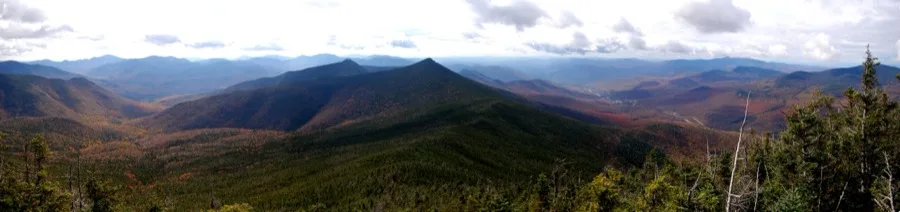
What to look for on Stage 1 webcams:
- Upper Ridge Deciduous Bands: Look closely at the band of forest just below the alpine conifer zone. When that strip turns amber-red, Stage 1 is at its height.
- First Dusting of Snow: October cold fronts frequently dust summits with early snow. Seeing white peaks towering above red and gold foothills is one of New England's most prized views (for winter trail planning, check our Ski Resort Snow Conditions Guide).
3. Stage 2 (Early to Mid-October): Mountain Passes, Notches & Covered Bridges
Bottom line: The classic postcard New England scenery happens here: Franconia Notch, historic mountain railways, and Vermont covered bridges.
By the second week of October, the color wave rolls off the summits and fills the mountain passes ("notches") and river valleys. This is the peak window for the White Mountains of New Hampshire and central Vermont.
In Franconia Notch, Cannon Mountain rises dramatically above Profile Lake and the alpine parkway. The ski area cams look straight down into the notch:
In Vermont, nothing captures the autumn essence better than historic covered bridges nestled among fiery red sugar maples:
In New Hampshire's Mount Washington Valley, the North Conway Historic Railroad depot provides a real-time pulse of valley floor foliage against the backdrop of the White Mountain National Forest. This period also marks peak traffic along the famous Kancamagus Highway (NH Route 112), where the scenic drive between Lincoln and Conway cuts through the heart of the White Mountains:
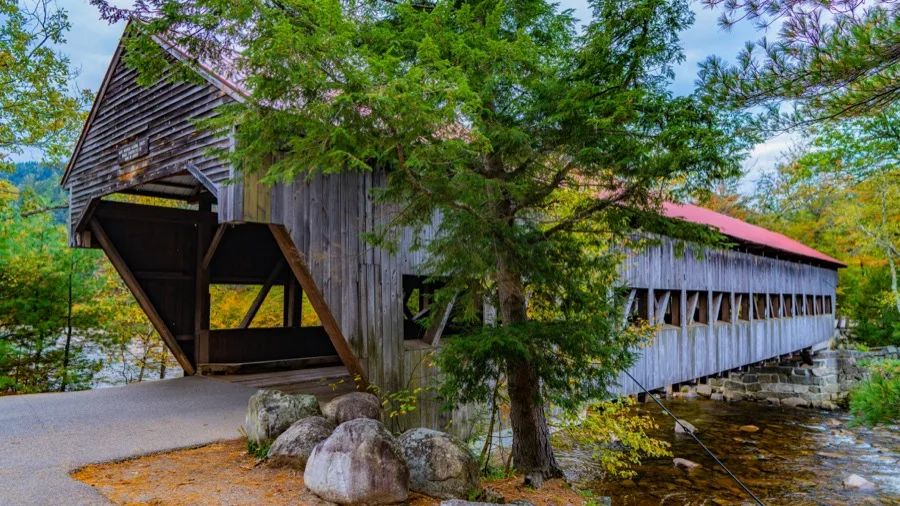
In the Green Mountains of central and northern Vermont, ski resort base cams like Bolton Valley reveal how quickly the forest canopy is transitioning from mottled green to peak gold:
What to check during Stage 2:
- Canopy Density: Look at the treetops framing bridges and roads. When individual trees blend into a seamless blanket of red, orange, and gold, you are at peak.
- Valley Fog: On crisp October mornings, river valleys often fill with dense fog until 08:30 EDT. Check back once the sun burns off the mist to see the full color palette.
4. Stage 3 (Mid-to-Late October): Highland Lakes, Coastal Acadia & Southern Ridges
Bottom line: Water bodies moderate local temperatures, extending the peak color window around lakes, coastal bays, and southern ridges well into late October.
Lakes and coastal waters hold summer heat longer than dry ridges, delaying leaf change by one to two weeks compared to northern peaks. This creates stunning reflections of bright autumn leaves on calm water.
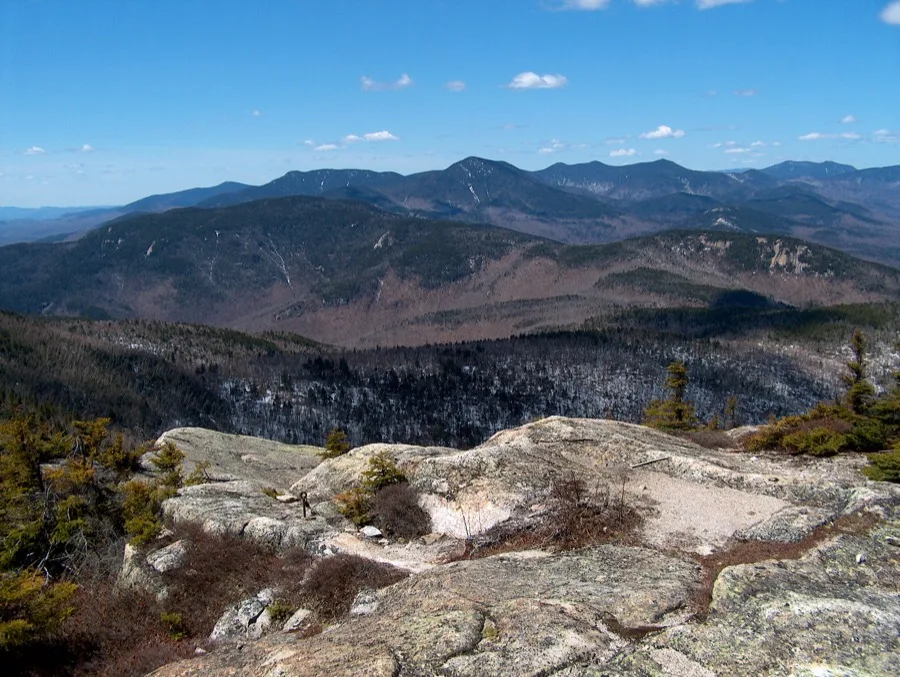
In New Hampshire, Chocorua Lake offers one of the most celebrated foliage reflections in North America, with Mount Chocorua framed across clear waters. Just north in the same Mount Washington Valley, the Attitash Mountain Village camera shows how far the color has spread across the White Mountain hardwoods:
In southern Vermont, Stratton Mountain in the southern Green Mountains reaches its peak slightly later than northern peaks, offering wide panoramic views across southern ridges:
In Maine's central wilderness, massive Moosehead Lake and Mount Kineo show striking foliage contrasts against deep blue glacial waters:
Along the Atlantic coast, Acadia National Park on Mount Desert Island combines granite ocean cliffs, coastal fjords, and inland ponds. At Jordan Pond, the surrounding hills turn rich copper, maroon, and yellow while ocean air keeps frost at bay:
5. The Southern Progression (Late October to Early November): Southern Appalachians & Great Smoky Mountains
Bottom line: When northern New England winds down, the autumn wave pushes south along the Appalachian chain into the Great Smoky Mountains.
By late October, northern New England forests enter "past peak," with bare branches standing out against fallen leaves. But leaf peeping doesn't stop—it simply shifts south along the Appalachian mountain chain.
In the Southeast, the Great Smoky Mountains of Tennessee and North Carolina experience their peak from mid-October at high elevations (Clingmans Dome) through early November in lower gateway valleys like Gatlinburg:
If you miss northern New England's early October peak, tracking southern Appalachian live cams gives you an extra two weeks of vivid autumn colors. (For late-season foliage in November and December, you can also track temple maple gardens in our Japan Autumn Foliage (Kōyō) Guide).
6. The 30-Second Field Check Before You Hit the Road
Bottom line: Never trust dates alone. Verify sunlight, canopy fullness, and upcoming windstorms before driving.
Before filling your gas tank for a foliage road trip, run this 4-step live camera checklist:
- Check the Deciduous Ridge Above Your Destination: If you plan to visit a valley town (like Stowe, VT or North Conway, NH), check a cam covering the hardwood ridge directly above it. If that higher slope is already bare grey sticks, the valley below is in its prime peak window.
- Check Between 07:30 and 10:30 EDT: Foliage looks dull, flat, and brown under heavy midday clouds or backlit evening sun. View webcams in direct morning sunlight when low-angle rays illuminate the maple canopy.
- Scan for 'Grey Stubble' on the Horizon: From a distance, a hillside can look colorful even if 40% of the leaves have already dropped. Zoom in on tree crowns against the sky: if you see thin bare branches sticking up like grey stubble, the forest is past peak.
- Watch the Wind Forecast: A strong cold front with steady 30+ mph winds can turn a peak hillside completely bare in a few hours. If a live cam shows peak color and high winds or rain are forecast for tomorrow, today is your day.
Frequently Asked Questions
When is peak fall foliage in New England?
What triggers bright red sugar maples in New England?
How can I tell if a spot is at peak color using a webcam?
Official Resources & Weather Data
More Viewing Guides
Explore real-time observation guides across global destinations.