
Japan Autumn Foliage (Kōyō) Live Cam Guide: How to Track the Peak Wave by Elevation
Plan your autumn leaves trip to Japan using real-time webcams. Track the Kōyō wave from Hokkaido's alpine peaks and Kamikochi to Lake Chuzenji and Kyoto's historic temple bridges.
Catching peak autumn colors (Kōyō or Momiji) in Japan takes a completely different plan than spring cherry blossoms. Cherry blossoms sweep north across the country in three weeks. Autumn leaves do the exact opposite: they start on the freezing mountain tops and roll down into the valleys over ten weeks.
1. How the Color Wave Moves: Down the Mountain
Bottom line: Cold air triggers the colors. The wave rolls downhill from high summits to river valleys over ten weeks.
Leaves do not follow a calendar; they follow the thermometer. Deciduous trees start turning once night temperatures drop steadily below 8°C (46°F), and speed up fast below 5°C (41°F). Because mountains get colder as you climb higher, autumn color starts at the very top and creeps downward week by week.
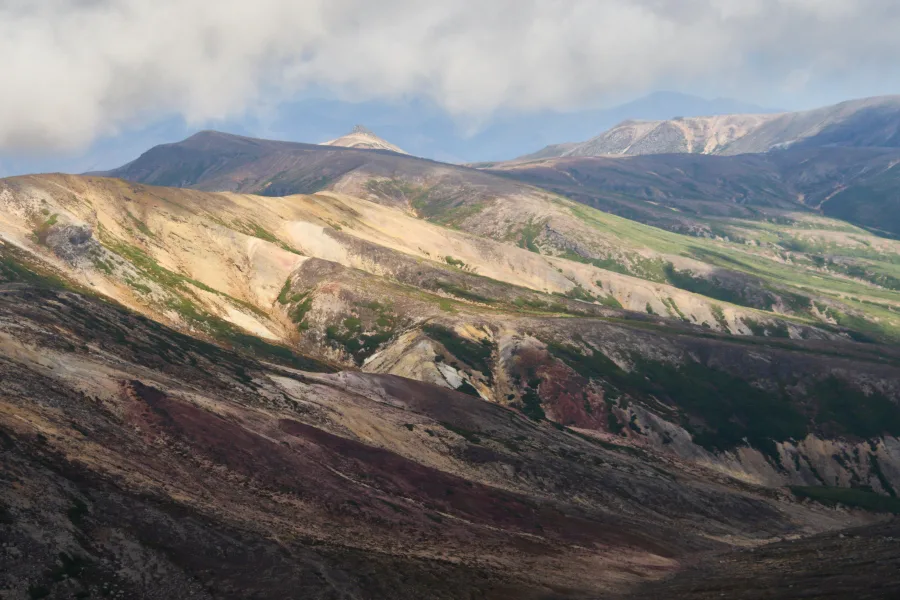
-
Stage 1 · Mid-to-Late September High Mountains: 2,000m+Volcanic Summits & High Peaks (First Colors in Japan)
-
Stage 2 · Early to Mid-October High Valleys: 1,200m – 1,600mHighland Valleys & River Basins
-
Stage 3 · Mid-to-Late October Mountain Lakes: 800m – 1,300mMountain Lakes & Ropeway Slopes
-
Stage 4 · Mid-November to Early December Lowlands: Sea LevelTemple Gardens & Historic Riverbanks
2. Stage 1 (Mid-to-Late September): High Mountain Peaks (2,000m+)
Bottom line: First colors happen on freezing volcanic ridges in Hokkaido and the Northern Alps.
Japan's autumn season starts at the top. In Hokkaido's Daisetsuzan National Park, mountain rowan and creeping shrubs turn deep crimson and gold across the volcanic rock by the third week of September.
At the same time in central Japan, the alpine plains of Tateyama Murodo (2,450 meters) turn into a carpet of gold right before the first winter snow.
What to look for on alpine cams in late September:
* Check the Upper Ridges: Color starts at the exposed summits where arctic winds hit first. If the top ridge looks reddish-brown while the ropeway station below is still green, the wave is moving down.
First Snow Over Red Leaves: Cold snaps in early October often drop white snow on bright red alpine bushes. This creates the famous three-color view (San-dan-kōyō*): blue sky, white snow, and red leaves.
3. Stage 2 (Early to Mid-October): Mountain Valleys (1,200m – 1,600m)
Bottom line: By early October, the color reaches high river valleys like Kamikochi. Look for golden larches along the river.
By October, the color drops into the highland valleys of central Japan. The most famous spot is Kamikochi in Nagano, a flat river basin sitting at 1,500 meters under the jagged peaks of the Hotaka Range.
Kamikochi is famous for the **Japanese Larch (Karamatsu)**. Instead of turning red, larch needles turn a glowing golden yellow along the banks of the clear blue Azusa River.
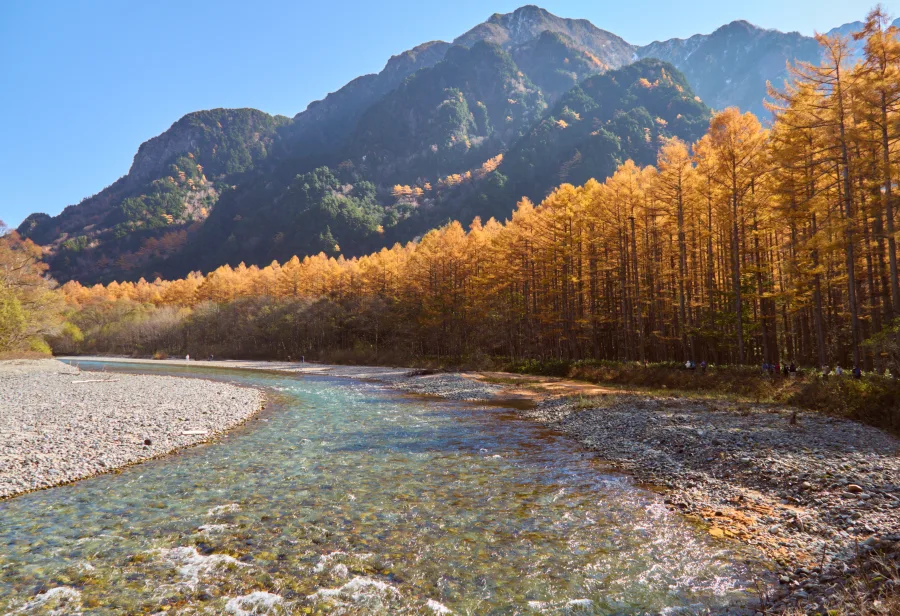
The Kappa Bridge webcam gives you an instant check for the whole valley:
What to check at Kappa Bridge:
1. River Reflections: The glacier water reflects the golden trees and the mountains above. When the trees next to the bridge turn bright yellow, the whole valley is at peak.
2. Bridge Crowds: In mid-October, foot traffic on Kappa Bridge gets heavy between 10:00 AM and 2:00 PM. Check early morning feeds (06:30 to 08:30 JST) to see clear views before the tour buses pull in.
4. Stage 3 (Mid-to-Late October): Mountain Lakes (800m – 1,300m)
Bottom line: Mid-elevation lakes like Lake Chuzenji hold their colors longer because the water keeps temperatures steady.
In late October, the color line hits mountain lakes in Tochigi and Yamagata. In Nikko National Park, Lake Chuzenji sits at 1,269 meters right below Mount Nantai.
The hills around the lake are covered with wild beech, oak, and maples, creating a patchwork of orange, yellow, and red. Because big lakes hold heat longer than dry mountain air, lake spots often stay colorful for two to three weeks.
Further north in Tohoku, the Zao Mountain Range shows layers of color. Looking out from the Zao Ropeway, you can see golden leaves around the middle station while the valley below is still green:
5. Stage 4 (Late November to Early December): Lowland Kyoto & Temples
Bottom line: The grand finale happens in Kyoto temple gardens and riverbanks in late November.
The last stage of Japan's autumn season happens in late November in the historic lowland gardens of western Japan. Kyoto's Arashiyama district is the classic spot, where cultivated Japanese maples frame wooden temple roofs, arched bridges, and green bamboo groves.
Unlike mountain forests of wild beech, Kyoto's maples turn deep blood-red and scarlet, designed to contrast against dark wood and green moss.
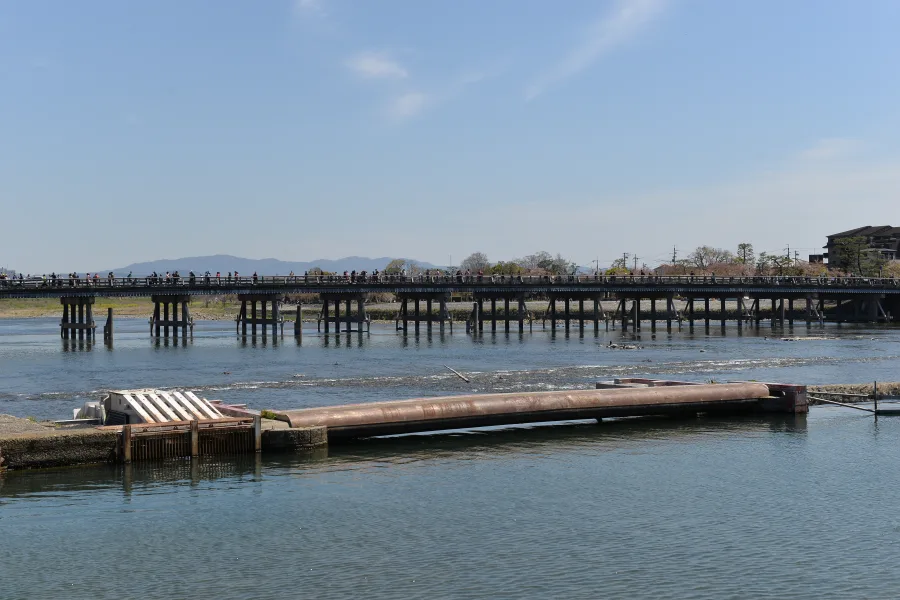
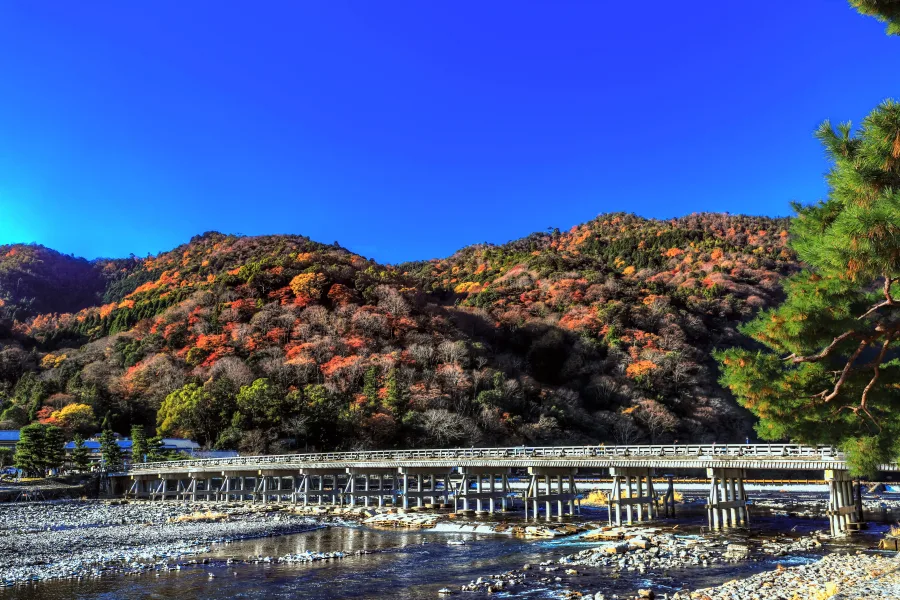
The Togetsukyo Bridge live camera looks across the Katsura River toward the Arashiyama hills:
What to check on the Arashiyama cam:
* Patchwork on the Hillside: The mountain behind the bridge does not turn red all at once. It starts with scattered patches of yellow and orange among the evergreens before turning into a full mosaic in late November.
* Bridge Crowds: On peak weekends, the bridge sidewalks pack completely full. Use the camera to time early morning visits (06:30 – 08:00 JST) when the river is peaceful and morning mist still hangs in the air.
6. The 30-Second Cam Check Before You Travel
Bottom line: Check the summit above, look for bright morning sun, and watch out for incoming storms.
Before hopping on a train or bus for autumn leaves in Japan, run this quick check:
- Check the Summit Above Your Spot: If you are heading to a valley gorge, check a mountain summit cam nearby. If the summit trees are already bare, the valley below is right at its peak.
- Check the Morning Light: Leaves look flat and brown on grey, cloudy afternoons. Look at the camera between 07:00 and 09:30 JST in bright morning sun to see real color saturation.
- Check for Bare Branches: A tree can look colorful from far away even if half its leaves blew off. Look closely at the top branches against the sky to make sure the canopy is still full.
- Watch the Wind and Rain: Late autumn storms can blow every leaf off the trees in a single night. If the webcam shows full red and a storm front is coming tomorrow, go today.
Frequently Asked Questions
When is the best time to see autumn leaves in Japan?
What triggers bright red maple leaves?
How can I tell if a spot is at peak color on a live camera?
Official Resources & Weather Data
More Viewing Guides
Explore real-time observation guides across global destinations.