
Brooks Falls Bear Cams: How to Watch Bears Catch Salmon Live (Katmai & Fat Bear Week)
Watch brown bears catch jumping salmon at Brooks Falls in Alaska. When to tune in, how to tell who's running the river, how to spot salmon pulses before they jump, and how to judge Fat Bear Week size on screen.
Every summer and autumn, hundreds of thousands of red salmon swim up the Brooks River in Alaska to spawn. A six-foot waterfall blocks their path — and that waterfall turns into the busiest bear buffet on Earth.
1. When to Watch: Matching Alaska Time
Bottom line: The two best times to tune in are mid-morning and late afternoon Alaska time.
Katmai is in the Alaska Time Zone (AKDT, UTC−8). Bears do not fish all day long. They fish hard in the morning, sleep off their meal in the grass during the early afternoon, and come back out before sunset.
| Alaska Time (AKDT) | US Eastern (EDT) | UK Time (BST) | Central Europe (CEST) | What the Bears Are Doing |
|---|---|---|---|---|
| 06:00 – 09:00 | 10:00 – 13:00 | 15:00 – 18:00 | 16:00 – 19:00 | Morning Rush: The biggest males take over the top of the falls. Golden light and jumping salmon. |
| 09:00 – 12:00 | 13:00 – 16:00 | 18:00 – 21:00 | 19:00 – 22:00 | Steady Midday: Mother bears with cubs fish downstream. Young bears try out spots at the edges. |
| 12:00 – 15:00 | 16:00 – 19:00 | 21:00 – 00:00 | 22:00 – 01:00 | Afternoon Nap: Full bears lie down in the grass or on gravel bars. The falls get quiet. |
| 16:00 – 20:00 | 20:00 – 00:00 | 01:00 – 05:00 | 02:00 – 06:00 | Evening Peak: The busiest time on the river. Most bears out at once across all spots. |
| 20:00 – 23:00 | 00:00 – 03:00 | 05:00 – 08:00 | 06:00 – 09:00 | Twilight Feeding: Solitary bears hunt in the dark shallows. |
For viewers in North America, 10:00 AM to 1:00 PM Eastern is the easiest sweet spot to catch high action during the workday.
2. Who Fishes Where? Reading the River Hierarchy
Bottom line: The bigger the bear, the better the spot. Look where a bear is standing to tell how tough it is.
Bears live alone, but so many salmon bunch up at Brooks Falls that dozens of bears share a single short stretch of river. Where a bear stands tells you its rank immediately:
-
Spot 1 · Top of the Falls Prize SpotThe Lip (Top Ledge of the 6-Foot Falls)
-
Spot 2 · Foam Pool Steady CatchesThe Jacuzzi (Swirling Deep Pool Below the Falls)
-
Spot 3 · Quiet Water Waiting RoomFar Pool & Island (Calm Side Water)
-
Spot 4 · Downstream Safe Family ZoneThe Riffles & Lower River (Shallow Gravel Beds)
Spot 1: The Lip (Top Ledge of the Falls)
- What you see on cam: A giant bear standing squarely on the top edge of the waterfall where the water plunges over.
- How it catches fish: The bear watches upstream and snatches jumping salmon right out of the air. It burns almost no energy once it gets this spot.
- Who stands here: Only the biggest, heaviest adult males on the river. If a younger bear tries to stand here and a big male walks up, the younger bear steps down immediately.
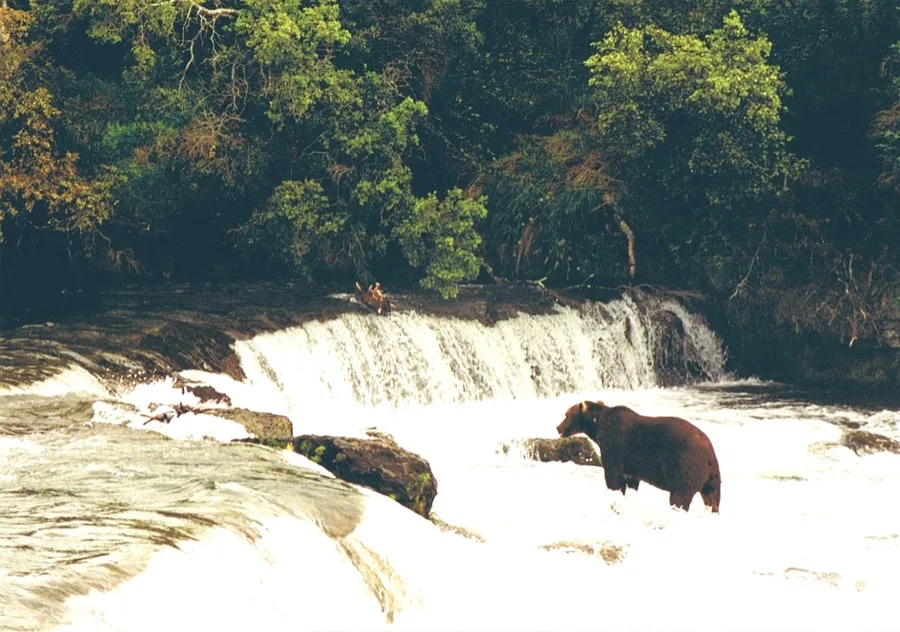
Spot 2: The Jacuzzi (Foam Pool Below the Falls)
- What you see on cam: A bear chest-deep in white churning water right beneath the center drop.
- How it catches fish: Dazed salmon that fail to jump the ledge fall back down into the swirling pool. The bear puts its face into the water ("snorkeling") and pins fish against rocks on the bottom.
- Who stands here: Experienced adult bears strong enough to push against the heavy waterfall current.
Spot 3: Far Pool & Island (Quiet Side Water)
- What you see on cam: A bear sitting calmly in the slow water across the river from the viewing deck.
- How it catches fish: Sits and waits, making short lunges when fish rest in the calm eddy.
- Who stands here: Medium-sized bears and teenagers avoiding confrontations with the big guys at the falls.
Spot 4: The Riffles & Lower River (Shallow Gravel Beds)
- What you see on cam: Bears splashing through shallow water 200 to 800 yards downstream.
- How it catches fish: Chasing and running down tired salmon in ankle-deep gravel flats.
- Who stands here: Mother bears with cubs (who steer clear of big adult males) and young bears learning to hunt.
3. The Underwater Cam: How to Predict a Surge
Bottom line: Check the underwater camera first. If the pool is packed with red salmon, the waterfall will get busy within an hour.
The best trick for watching Brooks Falls is using the multi-cam setup:
- Start with the Underwater Salmon Cam: Salmon rest in the cold, deep pool below the falls before trying to leap. When this camera shows dense schools of red-and-silver fish packed together, a big leap is coming.
- Switch to Brooks Falls Main: As the morning sun warms the water, salmon start jumping one after another. Bears on the ledge and in the pool start catching fish every few minutes.
- Switch to The Riffles or River Watch: When the big males at the falls are full, mothers with cubs and younger bears take over downstream. You'll see high-speed chases and playful cubs that you won't see at the main waterfall.
4. Fat Bear Week: How to Judge Size on Screen
Bottom line: Look at the belly clearance and the neck roll, not just how wide the bear looks from the front.
Held every year in early October by Katmai National Park and Explore.org, Fat Bear Week is a bracket-style voting contest celebrating bear survival. Fans vote online for the bear that gained the most weight over the summer.
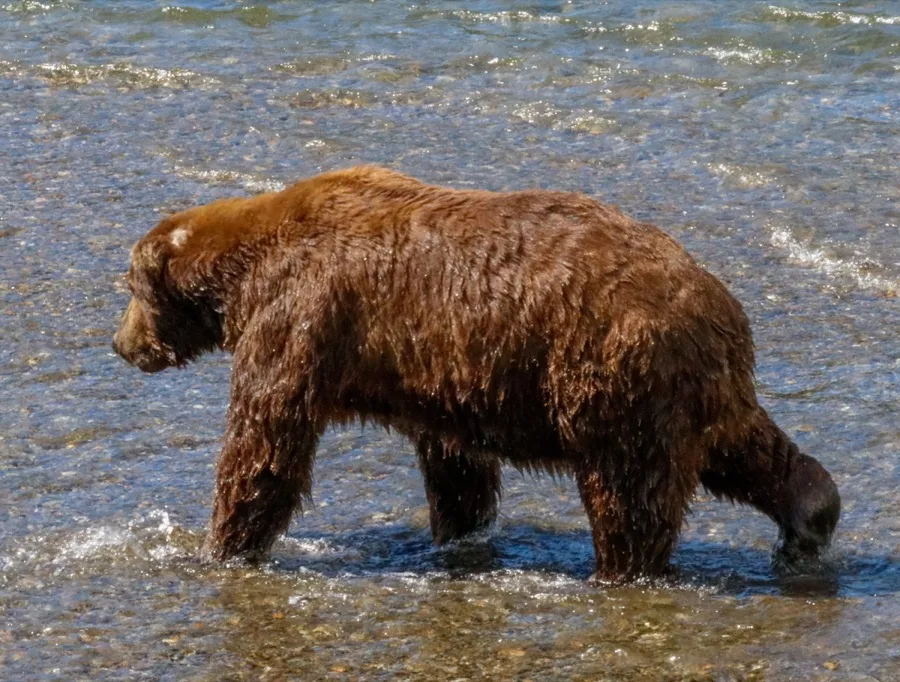
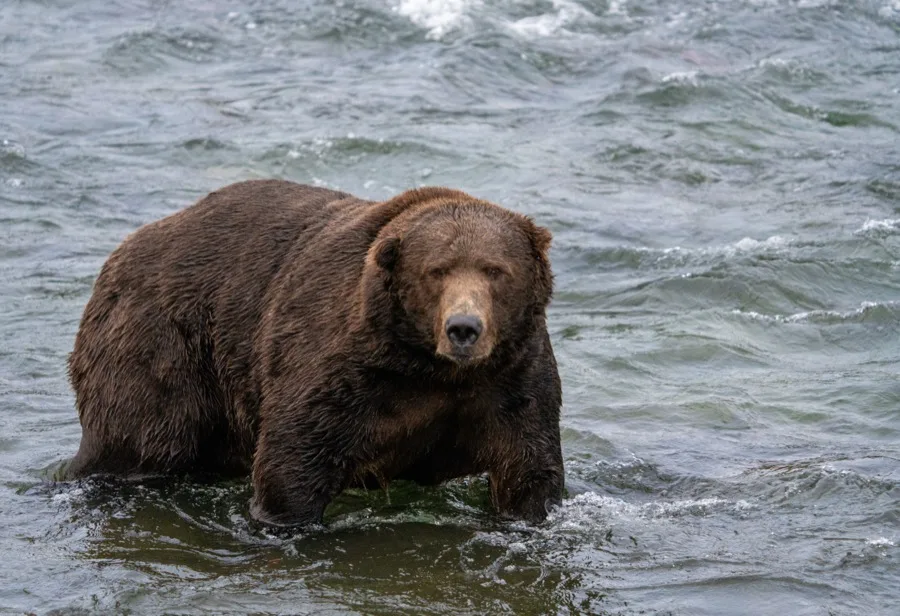
When judging bears on the live stream, look for these four markers:
- Belly Clearance: Early in July, a bear's belly slants sharply up toward its back legs. By late September, a champion fat bear's belly almost scrapes the river gravel as it walks.
- Shoulder Hump: In July, the hump of muscle on the shoulders looks lean and sharp. By autumn, it turns into a thick, rounded mound of pure fat.
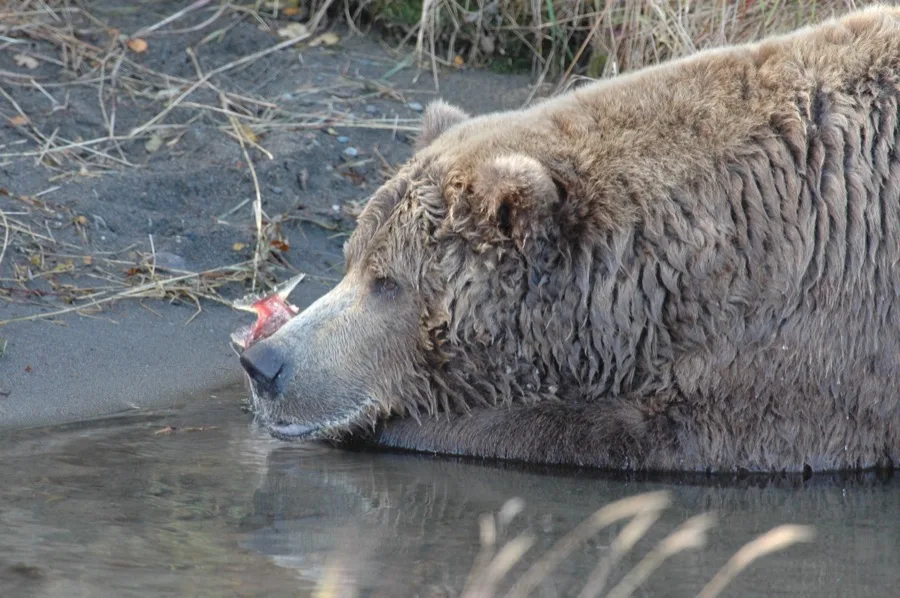
- Neck and Cheeks: In late season, a full bear loses the line between its jaw and neck, developing heavy, doughy cheeks and rolls around the collar.
- Selective Eating (High-Grading): Hungry July bears eat every part of the salmon — head, bones, and all. By September, bears get picky. They peel off and eat only the fattiest parts — the skin, brain, and eggs — leaving the rest for gulls and smaller bears.
5. Month by Month: When Do the Cameras Go Dark?
Bottom line: The cameras run from late June to late October. They go dark in November when the river freezes and the bears sleep.
- July (First Run): The first massive wave of salmon arrives. Bears come out thin and hungry from their winter sleep, shedding old fur.
- August (Summer Lull): The first salmon wave slows down as fish swim up into smaller streams. Fewer bears at the falls; many head to meadows or ocean mudflats for grass and clams.
- September (Peak Fat): The second salmon wave hits. Bears eat nonstop and reach their heaviest weights of the year. This is the best month to watch.
- Late October to November (Heading to Dens): Freezing cold sets in. Salmon die off. Bears head high up into the mountains to dig underground winter dens.
- November to May (Cameras Offline): Blizzards, ice, and frozen solar panels force rangers to pull the gear. Feeds return in June once the ice melts.
Frequently Asked Questions
Why do the biggest bears fight over the top of the waterfall?
How many salmon does a bear eat a day before winter?
How can I tell if bears are about to start fishing on the falls cam?
Why do the cameras go dark in winter?
Official Resources & Weather Data
More Viewing Guides
Explore real-time observation guides across global destinations.