
How to Watch Active Volcanoes Safely via Live Webcams (Lava Fountains, Thermal Glow & Ash Plumes)
A field guide to observing active volcanic eruptions worldwide. Learn how to decipher thermal signatures at night, tell ash plumes from harmless steam, track international alert systems, and watch Kīlauea, Reykjanes, Sakurajima, and Mount Etna in real time.
Watching molten rock erupt from the Earth's crust is one of nature's greatest spectacles. But on a live webcam, it is easy to misread what you are seeing.
A bright orange flare at 02:00 can be a fifty-meter lava fountain, or simply car headlights on a wet access road. A giant white cloud over the crater can look alarming, even when it is just harmless steam boiling off groundwater.
This guide gives you straightforward rules to read active volcano cameras across Hawaii, Iceland, Japan, and Italy with complete confidence.
Reading National Volcano Alert Systems
Bottom line: Each country uses its own alert scale. Never compare a USGS color code directly to a Japanese number level.
Official alerts tell you whether an eruption is happening before you even open a stream:
| Volcano & Authority | System Scale | What the Tiers Mean | Official Dashboard |
|---|---|---|---|
| Kīlauea (USGS / HVO) | 4-Tier Colors (Green, Yellow, Orange, Red) | Watch/Orange = Eruption underway with little ash; Warning/Red = Major ash hazard to aircraft | USGS Volcano Updates |
| Reykjanes (IMO Iceland) | Civil Defense Alert Phases | Alert Phase = Active fissure eruption; hiking perimeters strictly closed | IMO Reykjanes Page |
| Sakurajima (JMA Japan) | 5-Level Numeric Warnings (1 to 5) | Level 3 (Do Not Approach) = Mountain closed; explosive ash pulses expected | JMA Sakurajima Warning |
| Mount Etna (INGV Italy) | Aviation & Civil Defense Matrix | Yellow/Orange = Active lava fountains and bursts in summit craters | INGV Etna Section |
Kīlauea: Reading the Halemaʻumaʻu Lava Lake
Bottom line: Look for glowing red zig-zag cracks across the dark crater floor at night.
Kīlauea Crater on the Island of Hawaii hosts one of the world's most active lava lakes. The USGS maintains cameras pointed directly into the crater floor.
What to Look for on Screen
- Glowing Red Cracks: Molten lava cools in seconds when exposed to air, forming a dark rock skin. When the lake is active, this skin pulls apart, showing glowing red lines like a spiderweb.
- Rise and Fall Cycles: Magma levels naturally drop and refill over days or weeks. If the crater floor looks pitch black with zero orange lines between 21:00 and 04:00 local time, the lake is taking a break.
- Volcanic Smog (Vog): The blue-white haze hanging over the crater rim is volcanic smog loaded with sulfur dioxide gas.
Night Watching: Real Magma Glow vs. Artificial Lights
Bottom line: Magma shimmers with deep orange and reflects on low clouds; headlights move in straight lines.
Night gives you the clearest view of active lava because bright sunlight washes out the red tones. But night cameras can create optical illusions:
1. Real Magma Glow vs. Vehicles and Work Lights
- Real Lava: Glows deep red, orange, and yellow (800°C to 1,150°C). It stays in one area and pulses gently. If clouds hang low over the crater, magma casts a soft orange glow on the bottom of the clouds.
- Car Headlights: Move steadily across the screen in straight lines along roads or gravel barriers.
- Work Floodlights: Sharp, pinpoint white lights that stay completely still to illuminate monitoring stations.
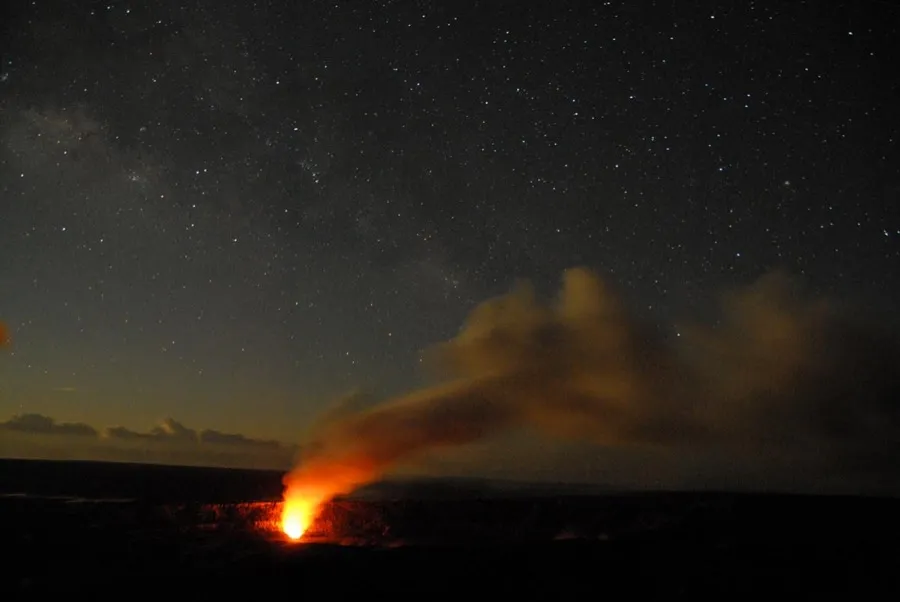
2. Camera Noise vs. Lava Fountains
In deep darkness, cameras boost sensor sensitivity, creating fuzzy salt-and-pepper grain across the screen. Real lava fountains spray upward in curved arcs and shower glowing rock down the sides of the cone.
Reykjanes Peninsula: Fissure Eruptions in Iceland
Bottom line: Watch for long walls of fire and black lava flows creeping toward protective gravel walls.
Unlike tall cone volcanoes, eruptions on Iceland's Reykjanes Peninsula crack open along long tears in the ground called fissures.
What to Look for on Screen
- Curtains of Fire: New eruptions shoot up as a continuous line of orange lava fountains hundreds of meters long, before focusing into individual cones.
- Advancing Lava Fields: Look for creeping black crusts. When the crust breaks open, bright orange liquid lava spills forward in pulses.
- Protective Gravel Berms: Massive bulldozer-built dirt walls built to direct flowing lava safely away from the town of Grindavík and local power plants.
White Steam vs. Dark Ash: Day Plume Diagnostics
Bottom line: White, puffy clouds that disappear downwind are water steam; dark, churning cauliflower clouds are hazardous ash.
During the day, checking the plume rising from the crater tells you what the volcano is doing:
- Color Pure White / Translucent
- Ascent Speed Buoyant, Billowy, Gentle
- Edge Behavior Soft; rapidly evaporates downwind
Harmless meteoric groundwater contact or degassing. Plume dissipates quickly.
- Color Dark Grey / Brown / Black
- Ascent Speed Forceful, Jet-like, Explosive
- Edge Behavior Dense, sharp cauliflower-head lobes
Pulverized silicate rock & glass. Severe danger to aviation and respiration.
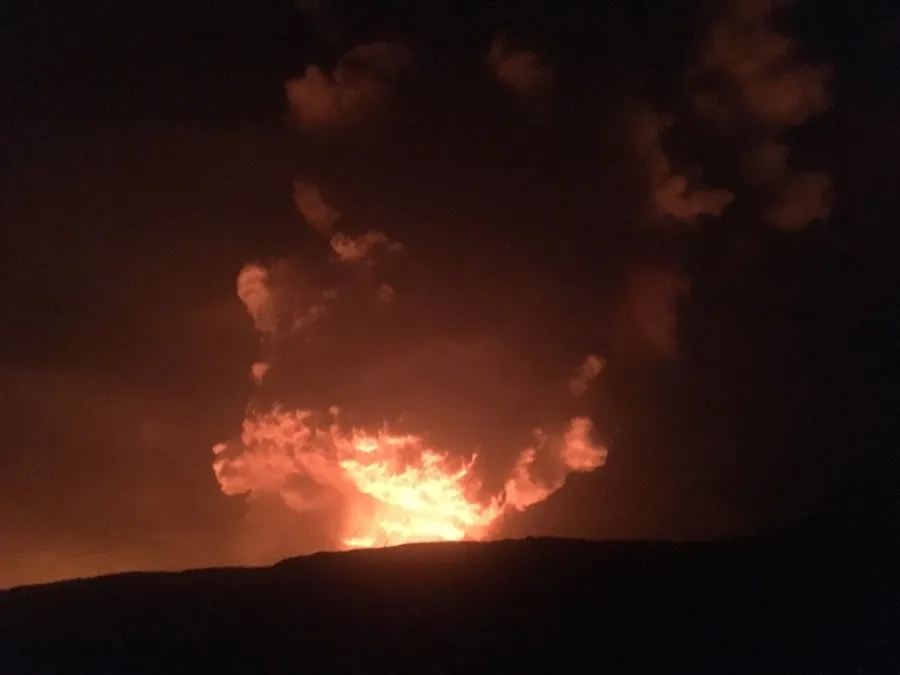
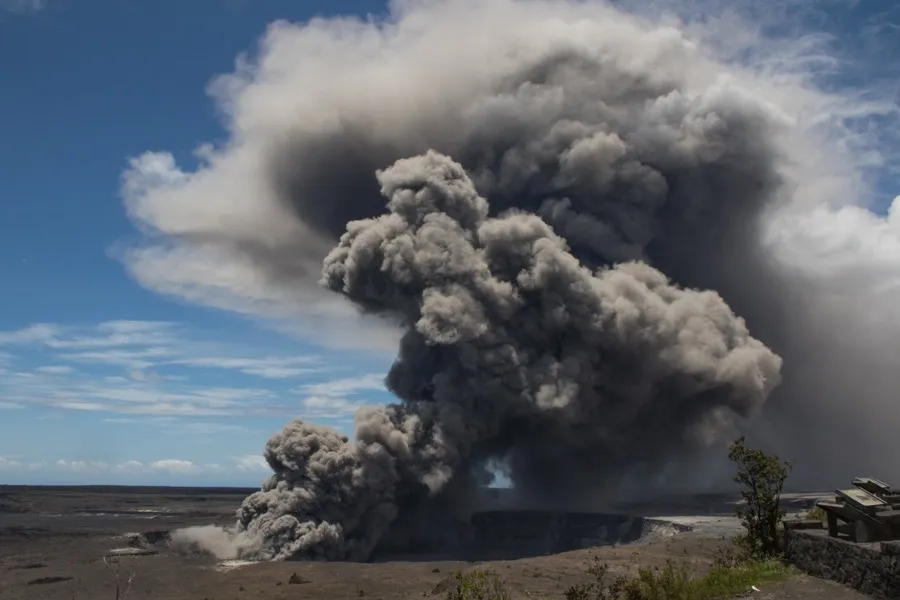
Visual Guide
- Harmless Water Steam: Pure white, fluffy, and see-through at the edges. On dry afternoons, steam plumes often evaporate and vanish a few hundred meters above the rim.
- Volcanic Ash Column: Dense grey, brown, or black cauliflower heads blasting upward. Ash does not evaporate; it drifts downwind for miles as a dark haze that dims the sun.
- Steam Blasts: When rain or groundwater hits hot underground rocks, it can blast white steam that turns light grey as old rock fragments get blown out.
Sakurajima: Japan's Explosive Volcano
Bottom line: Watch for sudden grey blast clouds by day and glowing lava bombs bouncing down the mountain at night.
Sakurajima in Kagoshima is one of the world's most active volcanoes, producing hundreds of explosive bursts every year from its Minamidake crater.
What to Look for on Screen
- Explosive Ash Bursts: Sudden blast clouds that shoot thousands of tons of ash skyward in seconds.
- Volcanic Lightning: Static electricity inside dense ash clouds creates quick lightning sparks inside the rising column.
- Lava Bombs at Night: Chunks of red-hot rock hurled high into the air, bouncing down the cone slopes like glowing embers.
Mount Etna: Europe's Highest Active Volcano
Bottom line: Watch for rhythmic orange lava bursts and winter snow glowing against bright red lava flows.
Mount Etna in Sicily stands over 3,300 meters tall. Monitored by Italy's INGV, it offers steady fireworks from its summit craters.
What to Look for on Screen
- Rhythmic Lava Splatters: Mild bursts throwing incandescent orange spatter into the air every few minutes.
- Fire on Snow: In winter, red lava flows carve through thick white summit snow, creating large white steam plumes where fire meets snow.
24-Hour Global Volcano Watch Schedule
Bottom line: You can watch active eruptions around the clock by following nightfall across time zones.
- 10:00 – 16:00 UTC (Japan Night): Watch Sakurajima for night explosions and glowing lava bombs.
- 18:00 – 04:00 UTC (Europe & Iceland Night): Watch Mount Etna and Reykjanes under dark European skies.
- 06:00 – 15:00 UTC (Hawaii Night): Watch Kīlauea when the Halemaʻumaʻu caldera floor glows without sun glare.
Quick Checklist Before You Watch
- Check official survey status first: Verify live alerts on USGS, IMO, JMA, or INGV.
- Watch during local night: Molten rock shows up best between twilight and dawn.
- Inspect the plume: Pure white clouds that vanish quickly are steam; dark billowing columns are ash.
- Switch cameras if fog hits: If a summit view gets covered in low clouds, look for a wide valley view to check the mountain profile.
Frequently Asked Questions
Why does an active volcano appear dark or calm during the day on live webcams?
How can I tell harmless volcanic steam apart from a hazardous ash eruption?
What is the difference between USGS Watch and JMA Level 3 alert levels?
Is watching volcanic eruptions on live cameras completely safe?
Official Resources & Weather Data
More Viewing Guides
Explore real-time observation guides across global destinations.